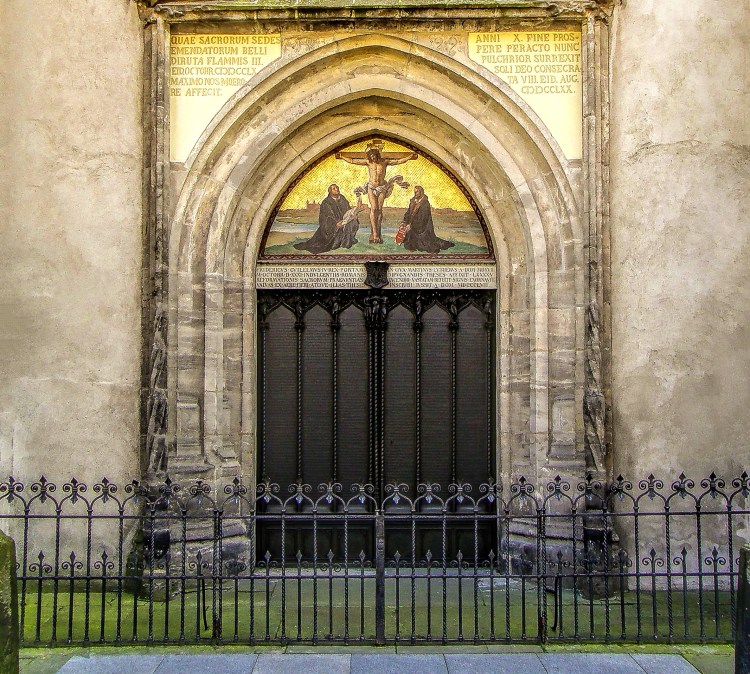
An extract from a larger photo by Andreas Breitling from Pixabay.
Last month I looked at the idea of integrity and whether it still matters, as we watched the inauguration of a new (well, second-hand) President. I don’t want to focus directly on him again because we have been force-fed so many “edicts” from the White House this month, and for many, the distortion of truth in the last few days (17th-21st February) creates a lot of anxiety. Trump has become a kind of evil figure controlled by the dark side, and I personally think, Evangelicals in the US have been deceived by him. I truly hope to be proved wrong. However, it will be difficult not to do any blog at the moment and not touch on some sort of connection with one of the latest decrees or pronouncements.
In my “About” page – an introductory page to this website – I talked about some of my backstory. I referred to my experience of growing up and spending my first fifty years in a Baptist church in London. I then moved to Scotland and spent another eight years in and around Baptist churches, approximately five of which were spent as a member of one of those churches, having the role of a home-group leader and deacon (church leader) for a good part of that period. When I left that church because of its growing antipathy towards the LGBTQ+ community, I instinctively looked at all the other local Baptist churches first, and then Methodist, Episcopalian and Church of Scotland, seeking a place to settle. Although I liked some of them because of their friendliness, or their affirming stance towards the community, or the way they used their music in worship, I couldn’t find a place that ticked enough boxes to feel comfortable. There was one church I was very fond of and visited many times over this long period. However, because they became more and more anti-gay during the time I attended, that door slammed shut, and I resumed my search. Eventually, I went to a church run specifically by, and for, those in the LGBTQ+ community. As its primary focus was on the teachings from Scripture, and seeking to minister to many people who have been hurt by their experiences within churches, I found a home there, and here I happily remain!
I have always had an evangelical slant to my theology. But in recent years I have grown increasingly uncomfortable with that label because of the dreadful political nuances associated with that label, not just in the States, but increasingly here as well. I now don’t really know whether I am still an evangelical or not. Maybe I’m a “Recovering Evangelical”, perhaps a liberal evangelical, I just don’t know! I’m not a big fan of labels, but I recognise they have their uses – for example it gives you an imperfect picture of who I am. I still hold to a basic evangelical outlook, but some of the trimmings I am forced to leave behind.
I need to clarify to start with, that the term “Evangelical” can sometimes cause confusion because it is used in different ways depending on the context. This is because we have a church denomination called the Evangelical Church, but normally we usually use the term for a group of people with a particular outlook on how they express their faith. So, you can be an Anglican, a Methodist, a Baptist, Evangelical churches, much of the Brethren church, and many others, including most charismatic churches and many non-denominational churches, and all these shelter under the “Evangelical” banner. As we go on, we will see what evangelicals emphasise.
In the UK we have the Evangelical Alliance, an umbrella group, to whom most evangelical churches belong, and people can join it either as individuals, or as a church. They have a basis of faith which you can read here. I can still just about go along with their tenets, but I’d want to add the word “usually” to one of them and use a bit of wriggle room to refine another! However, I could not in good conscience become a member because of their direction of travel. Although, they are talking about sexuality, they still view the issue as something sinful, according to one commissioned writer who posted that it “wasn’t in line with the life I’d just found in Christ”.
Another charity that promotes a conservative evangelical stance is the Christian Institute, and whilst I was pleased when I heard about its foundation in 1991 because here was a Christian-based pressure group. I now hold my head in my hands in despair at many of its policies, which seem to echo much of what is so sad about the lack of grace, care and love for people in today’s Trumpian America. I’m beginning to wonder whether we have now entered the realm of Margaret Atwood’s The Handmaid’s Tale. The Wikipedia pages about the Christian Institute, don’t seem to have been updated in the last few years, but at least they give a flavour of their activities.
However, although Evangelicalism is something that is familiar to me, it isn’t for a good number of people, so, what the heck is it? When did it start and does it still retain its founding principles?
There is no way I can give you a detailed description in a couple of thousand words! The long Wikipedia page, and its links, will soon dispel any notions of that possibility, however, I will try and give a bit of an overview, probably from an angle which reflects my own background, although I hope you find it helpful, nonetheless.
Evangelicalism, as a distinct movement within Christianity, has its roots in the religious upheavals of the 16th century, particularly in the Protestant Reformation. However, its precise origins and identity began to take greater shape in the 18th century, but it is only in the last sixty years that it has become much more politicised.
In the 16th Century church life in Western Europe was very different to today and was dominated by the Roman Catholic Church, which held significant spiritual, political, and social authority. The Church was deeply integrated into daily life, and its practices and teachings shaped the worldview of most Europeans. The Catholic Church (there was no real alternative in much of Europe to Roman Catholicism at this time) was seen as the ultimate authority on matters of faith, doctrine, and morality. The Pope, bishops, and clergy were considered the mediators between God and the people, and they interpreted the Latin Scriptures as they saw fit for the uneducated masses.
Until quite recently (within my lifetime – the 1960’s) the Mass was conducted in Latin, again making personal engagement impossible for most people; in fact, it can still be experienced in Latin in some places and on certain occasions. Amongst other things the Church taught that salvation required both faith and good works, which, whilst technically correct, the balance was much more focussed on what people did, and less on a personal experiential faith. And it was belief, rather than faith. This teaching included compulsorily participating in the sacraments, performing acts of charity, and avoiding sin. The emphasis was on being seen to do ostentatious good, rather than doing things as an expression of a heartfelt faith.

Superstition and folk beliefs were often intertwined with official Church teachings; hence you will frequently see images of the “Green Man” carved into the columns, arches and over the doors of many old church buildings, not just in Britain, but all over Europe. Southwell Minster have several (The event flyer on that link is clearly out of date, so could disappear). It’s uncertain what they represented, but although some describe them as having a Christian heritage, as this is not a reference to any Biblical character or story, it is more likely to represent some pagan figure (some suggest a Bacchus origin), and one of the roles of the church was to provide protection against evil spirits, illness, and misfortune.
Culturally, everyone was expected to attend Mass on a Sunday, where the priest who may, or may not truly believe in God, would explain the teachings of the Bible as he understood it, to his congregation. While many priests were indeed sincere in their faith, others may have approached their role more as a job, influenced by the social and economic structures of the time. If you are interested in reading more about the state of the Church before the Reformation, Alister McGrath has written a helpful piece here.
Probably one of the key triggers of the Reformation was the invention of the printing press in 1440, which made it possible to print large numbers of the same document. It became possible for Bibles to be printed at volume, rather than written out by hand. Then in 1611 the King James’ Bible (the Authorised Version) was printed, and ordinary people could see for themselves what the Bible said.
About 100 years previously in 1517 Martin Luther had nailed his Ninety-five theses to the church door at Wittenburg to criticize the Roman Catholic Church’s sale of indulgences, which he saw as corrupt and contrary to biblical teaching. The background here was that if the church sold you an Indulgence, your forgiveness by God was assured. Thus, it was a nice little earner for the Catholic church to be able to sell these Indulgences to those who could afford them. When people realised that you were saved by God’s grace, and an indulgence wasn’t worth the paper it was written on, they understandably felt put out! Through this period there was a growing excitement and enthusiasm about what the Bible said, and the church was challenged about its hypocrisy.
The Reformation of the 16th Century, particularly through figures like Martin Luther and John Calvin, shifted the focus away from tradition, rituals, sacraments, and good works, and instead emphasised the idea of “sola scriptura” (Scripture alone – the authority of the Bible), “sola fide” (faith alone – personal conversion), and “the priesthood of all believers” (every Christian in God’s eyes is viewed as a Priest, and can come into God’s presence directly, and without the need of an intermediary), which challenged the hierarchical, ritualistic structure of the Church and opened up a new understanding of personal faith and salvation, which many found exciting and refreshing.
In 1415 John Hus had been burned at the stake for his criticism of the Roman Catholic Church. Over the following years, his followers, a small group, known as the Hussites, laid the groundwork for later reform movements. In 1722 the modern Moravian Church began when a group of Hussite refugees, fleeing religious persecution, settled on the estate of Count Nicolaus Ludwig von Zinzendorf in Herrnhut, Germany. Zinzendorf, a devout Christian, willingly welcomed them, and provided a place for their religious community to grow. The group began to gather in prayer, study, and fellowship. Five years later this group experienced a profound spiritual revival, sometimes referred to as their “Day of Pentecost.” During this revival, the community experienced a deep outpouring of the Holy Spirit, and the Moravians, as they became, formed a unified congregation. The characteristics of the group were that they had:
- An emphasis on personal piety, community worship, and the love of Christ.
- A missionary zeal, with a focus on outreach and service.
- A strong sense of community and support for one another in faith.
- A simple liturgy with a focus on the heart of worship and the meaning of the Gospel.
In 1735 the Moravians began missionary work, which became a hallmark of their faith. They sent missionaries to places such as the Caribbean, North America, and Greenland, and their outreach efforts were especially notable in spreading Christianity to indigenous peoples.
When we talk about piety, we tend to have a picture of someone detached from their surrounding culture – someone who is humourless and fervent – maybe someone who is “so heavenly minded, they are no earthly use”! However, the Pietists were a religious and spiritual reform movement within Christianity that emerged in the late 17th century, primarily within the Lutheran tradition, although it also influenced other Protestant denominations. The Pietists were a reaction against the formalism, intellectualism, and lack of personal piety that some reformers felt had crept into church life after the Protestant Reformation. Pietism sought to promote a more heartfelt, personal, and practical expression of faith. It is perhaps through them that we can see the clearest roots of Evangelicalism today, because they emphasised:
- Personal Faith and Devotion: They stressed the importance of personal conversion and a deeply felt, inward experience of God’s grace. It sought to make faith more than just a set of doctrinal beliefs but instead a personal, heartfelt relationship with God that led to personal Bible reading, prayer, and spiritual discipline.
- Scripture and Spiritual Growth: We just mentioned Bible reading, but they recognised the Bible as a guide for Christian life, promoting Bible study and individual reading as a means of fostering personal spiritual growth. This resulted in being transformed by the Word of God, not just mentally accepting Christian doctrines, but allowing them to shape one’s character and actions.
- The Inner Life and Holiness: Pietism encouraged Christians to strive for holiness in daily life. The inner transformation of the believer was seen as central, and good works, ethical behaviour, and love for others were seen as natural outflows of a living faith. A focus on the “new birth” and the transformation of the heart through the Holy Spirit was central to Pietist teaching.
- Community and Fellowship: Small, intimate Christian fellowship groups known as “societies” or “bands”, which encouraged a sense of Christian community and accountability were highly valued. These groups met regularly to pray, discuss Scripture, and encourage one another in their spiritual journeys.
- Missionary and Social Engagement: Pietists were often involved in social and missionary work, believing that true faith should lead to active service and outreach to others, especially the poor and marginalized. The movement played a role in the early development of Protestant missions, with Pietists seeking to spread the Gospel to non-Christian lands.
- Critique of Formalism and Institutionalism: Pietists were critical of what they saw as the cold, formal, and ritualistic nature of many churches. They believed that faith had become too intellectual and disconnected from everyday life, and they sought to revive the emotional and experiential aspects of worship.
There is no start-date for Evangelicalism as it was the result of a gradual evolution of ideas and teaching that had its roots in the Reformation. Around this same time, we had the preaching of John Wesley (1703-1791) who was a central figure in the Evangelical Revival. Wesley founded the Methodist movement with his brother Charles, initially within the Church of England, and his teaching emphasized personal faith, holiness, and social justice. Charles Wesley (1707-1788) was also an Anglican cleric and a prolific hymn writer, composing more than 6,500 hymns throughout his life. Both he and his brother John, underwent profound religious conversions within days of each other in 1738. Although they had considered themselves Christians prior to this—evidenced by their journey to America in 1735 to serve as ministers—their mission ultimately failed, leading them to return to London. So, it was in 1738 that both brothers experienced transformative spiritual awakenings, which brought a deeper sense of reality, purpose, and vitality to their faith.
We know that in January 1739, Charles Wesley was appointed as curate to serve at St Mary’s Church, Islington (in London), but was forced to resign when the churchwardens objected to his evangelical preaching. During their lives, John and Charles travelled across the length and breadth of Britain and Ireland, preaching to crowds in open fields and also commissioned lay preachers to preach in parishes – sometimes without permission, to the annoyance of established Anglican clergy.
Although the brothers founded Methodism within the Anglican church around 1740, the Methodists eventually later separated themselves from the Anglican church after the deaths of the Wesley brothers, and became a distinct denomination.
Another great preacher during this period, and a contemporary of John and Charles, was George Whitefield (1714–1770). Whitefield and Charles Wesley would regularly exchange letters, and we understand that Charles wrote a hymn specifically for Whitefield. (surprisingly “Hark! The Herald Angels Sing” in 1739, though originally called “Hark! How all the welkin rings” – a catchy little title! No wonder Whitefield changed it!😂) Whitefield played a key role in spreading Evangelicalism, again through open-air preaching and revivals across Britain, and then also in the American colonies.
Whilst mentioning America we ought to mention Jonathan Edwards (1703–1758) who was a prominent American preacher, theologian, and philosopher, best known for his role in the First Great Awakening, a religious revival movement in the 18th century centred mainly on the New England colonies.
The Second Great Awakening (1790s–1830s) had a wider geographic reach, particularly in the frontier regions and Western territories (e.g., Kentucky, Tennessee, and Ohio), where many new Revivalist camp meetings took place. It also spread rapidly throughout the Eastern states and into the South. This revival movement also heavily influenced the Methodist and Baptist denominations, which grew significantly during this time.
Through the 19th and 20th centuries there were other significant influences where evangelicalism faced challenges from theological liberalism and higher criticism of the Bible. This led to the Fundamentalist-Modernist Controversy, a struggle in the 1920’s‑30’s in America, between those who affirmed traditional Christian doctrines (fundamentalists) and those who sought to reconcile Christianity with modern science and culture (modernists). Perhaps the most significant event was the Scopes Trial (a.k.a. Scopes Monkey Trial) in 1925, where a high school teacher was put on trial for teaching evolution. I don’t have the space to deal with this in full, but it centred around a creation vs evolution argument. Religious fundamentalists had made it illegal for teachers to teach human evolution, but John Scopes deliberately incriminated himself so the case could be brought. He was found guilty, but the verdict was eventually overturned on a technicality. In American evangelical circles today (as in the UK), there is still a heavy bias against the teaching of evolution.
Fundamentalists, who were largely evangelical, emphasized the inerrancy of Scripture, the virgin birth, Christ’s substitutionary atonement, His bodily resurrection, and the imminent return of Christ. They were mostly people who rejected science especially when it seemed to conflict with the Bible, and tended to live lives separate from society in line with their literalist interpretation of 2 Corinthians 6:17 (NIV): 17 Therefore, “Come out from them and be separate, says the Lord. Touch no unclean thing, and I will receive you.”
In the mid-20th century, a new movement called neo-evangelicalism emerged, led by figures like Billy Graham, Carl F.H. Henry, and Harold Ockenga. Neo-evangelicals sought to distance themselves from the separatism and anti-intellectualism of fundamentalism while maintaining orthodox theology. They emphasized engagement with culture, social responsibility, and evangelism.
Billy Graham’s crusades (and I attended one in London in 1973), which drew millions worldwide, epitomized this new approach. Organizations like the National Association of Evangelicals (NAE) and magazines like “Christianity Today” provided a platform for neo-evangelicals to articulate their vision. Billy Graham engaged and debated with theologians and scientists very readily and so he helped strengthen evangelical thinking across the world.
The 1970s and 1980s marked a turning point in evangelicalism’s involvement in politics. The rise of the Religious Right in America, led by figures like Jerry Falwell (founder of the Moral Majority) and Pat Robertson, was a response to perceived moral decline in the States. Issues like abortion (following the 1973 “Roe v. Wade” decision – recently overturned in 2022), school prayer, and LGBTQ rights galvanized evangelicals to political action. Jerry Falwell and other leaders in the Moral Majority made statements suggesting that AIDS was God’s judgment on gay people. This view resonated with broader conservative and evangelical Christian views at the time, although it was highly controversial and criticized by many in the medical and public health communities. I believe it was largely this period that demonised the LGBTQ+ community in evangelical circles.
A further step was taken with the election of Ronald Reagan in 1980 when the Religious Right cemented the alliance between evangelicals and the Republican Party. Reagan’s conservative policies and rhetoric resonated with evangelical values, and evangelicals became a key voting bloc for the Republicans. There was a superb TV series in 2020 called “Mrs America” a historical drama that focused on the 1970s feminist movement and the fight for the Equal Rights Amendment (ERA), and it highlights the rise of the Religious Right in the United States. The show dramatizes the efforts of Phyllis Schlafly, a conservative activist, who led the opposition to the ERA and was instrumental in mobilizing the Religious Right in support of Ronald Reagan’s presidential campaign.
The 2016 election of Donald Trump marked another significant moment in the relationship between evangelicalism and American politics. Despite Trump’s egotism, morality and lifestyle, which runs counter to traditional evangelical values, he gained overwhelming support from white evangelicals. Exit polls showed that 81% of white evangelical voters supported Trump, both in 2016, and sadly, this was repeated again in 2024.
So, how would you describe the key facets of Evangelicalism today?
I think the main areas I would highlight are as follows:
- Biblical Authority: Primarily evangelicals tend to believe that the Bible is “God-breathed” (that God virtually dictated every word) and is therefore inerrant (that there are no errors in the text) and it should be interpreted literally.
- Salvation is only through Faith in Jesus Christ: That the death and bodily resurrection of Jesus are central to the Gospel message, and individuals must accept Jesus as their personal Lord and Savior to receive salvation.
- Personal conversion experience: There is an emphasis on a personal, transformative experience of conversion or “being born again.” This encounter marks a person’s commitment to Christ and their acceptance of Him into their life, typically associated with repentance and faith.
- Evangelism and Mission: There is a strong commitment to evangelism—the spreading of the Christian message—and mission work. They believe that it is important to share the Gospel with others to bring them to faith in Christ and therefore to expand God’s Kingdom on Earth. This includes a determination to apply Biblical values to national legislation. As I see it, this desire to adhere to Biblical law lacks any capacity for God’s grace to be exercised.
- The importance of a personal commitment and relationship with God: Evangelicals often emphasize the importance of having a personal relationship with God through prayer, worship, and Scripture reading. This relationship is seen as an ongoing, intimate experience rather than merely a set of beliefs.
As I said at the beginning, it’s a lot more complicated than that, but I hope that acts as an overview, and you can explore this more deeply. Has Evangelicalism retained its core principles? That is a subjective question and will depend on your own perspective. From where I sit, I would say no, because it has lost its ability to respect and care for others who might have a different view. The attitude now is that it is “my way, or the highway”. “My views reflect God’s views and yours don’t.” As in the days of the Scopes Trial, evangelicalism still retains its fear of information that differs from what they instinctively “know is right”!
How does Evangelicalism appear today? This is the subjective tricky bit. Last time I praised Bishop Mariann Edgar Budde for her entirely Gospel-centric appeal to Trump. However, I was taken aback by one article I read written by someone living here in Scotland, claiming that people were championing the bishop “by mere fact of her being a boldly outspoken woman in leadership”. The writer then compared Bishop Budde to Queen Ataliah, an evil Queen Mother who avenged her son’s death by seeking to kill the rest of the royal family. The writer concluded the piece justifying the comparison, by saying:
“Let’s not draw conclusions where there aren’t any, but it bears consideration; Athaliah’s arrival on the scene of biblical history could have promoted unity, and bishop Budde’s place at the US President’s first prayer service was also a missed opportunity to bridge a divide. Watching a separate video clip of Budde expressing her belief that “a woman can adhere to the spectrum of life” and still support abortion, confirms there is nothing new under the sun. Women in positions of power don’t always warrant celebration.”
Wow! Were you looking at the same godly woman I was? It utterly misses the message that was delivered to Trump. So, Bishop Budde can support abortion – that may be unusual perhaps amongst evangelicals, but not unheard of among Christians generally. She was not advocating going out of her way to systematically kill babies, or that abortion should be a standard method of contraception, but that there may be occasions when it is sadly needed. You can’t therefore make the jump and liken the Bishop to Athaliah, who methodically set out to destroy any and all competition to her becoming queen. The writer seems have already judged her earlier in the piece, because of the comment near the beginning about the precarious positions of the Episcopal church in America given “its unbiblical teachings on same sex marriage”. As I said last time, I believe the Bishop will have put a smile on the face of God because she has the spiritual vision and courage that Franklin Graham didn’t have at the inauguration. Indeed, subsequently Graham made a comment on a podcast dismissing the cathedral as having been “taken over by gay activists”. Sadly the writers’ attitude to dismiss everything Bishop Budde says because of her positions on abortion and the LGBTQ+ community, is a fairly typical response in Evangelical circles.
When the Christian worship leader Vicky Beeching “came out” publicly, all the songs she had written and recorded over the years, songs that people had been using to worship God, suddenly became tainted, and her albums withdrawn from sale by publishers. In addition her music and worship contract was immediately terminated. On her website you can get more of her story , and her book “Undivided: Coming out, Becoming Whole, and Living Free from Shame” is a must read, and is listed on my Resources pages.
In his book “Stranger At The Gate”, Rev. Dr. Mel White tells a very similar story about his rejection by the church following his own coming out. In 2017, when Eugene Petersen the 84yr old author of The Message Bible was asked about those who were gay and whether he would conduct a gay marriage if asked, he said “Yes”. A day later, Lifeway Christian Bookstores, threatened to pull Peterson’s “The Message” Bible off their shelves, unless he changed his stance. The following day, he was forced to revert his public position so that people could still buy The Message, and his other books, but I’m sure he retained his views privately until his death the following year.
Christians can be so daft – if a book or a song/hymn or a prayer can lead a person into a deeper relationship with God one day, because the words have been filled with the grace and spirit of God, even if the author has “changed”, why can’t those same words do the same thing the following day? Has God lost His power? In Vicky’s case her sexuality hadn’t changed – she had been lesbian for the whole period of her ministry, and her songs drew people to Jesus during that time. The only issue was that people didn’t know. But God had used her throughout, and still does. The letters, teachings, words and notes haven’t changed. I wonder who has really made God sad with their actions.
Hmmm, I remember Jesus riding into Jerusalem to acclaim and a few days later the same people wanted him dead, and in a month we’ll celebrate Easter once again.
I’m sorry, that’s a lot longer than planned, but what do I remove? 🤔
 Changing Minds