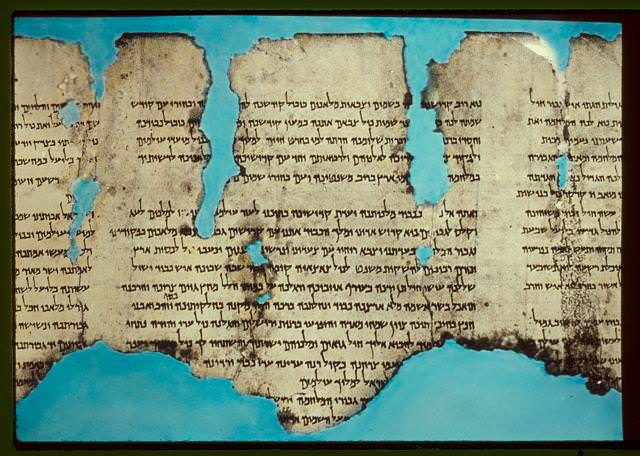
Original image by Matson Photo Service. Uploaded by Mark Cartwright, Public Domain
[Long-term readers skip to the next paragraph!] By way of an introduction for any new readers, this current series of blogs is intended to look back at the themes I covered in an essay I wrote between 2015 and ~2020, and which proved foundational to my own understanding of God’s love for the LGBTQ+ community. The essay is too long but was only initially intended for my own reference, until others insisted I make it available for anyone to read. It was long because I wanted to make sure I hadn’t missed anything obvious and I had tried to address every counter argument a person might make. These blogs are therefore aimed at bringing it up to date, but in a hopefully shorter, and certainly different, form.
Last time, I was looking at transgender and intersex inclusion and how Jesus and the Bible demonstrate wholly affirming and loving language, requiring his people to show by their actions how much we should be affirming and treasuring these people, that societies frequently treat as outcasts.
Today I want to turn my attention towards the lesbian and gay and work through a Biblically centric view. For clarity I will use the term “homosexual” when referring to both lesbian and gay together, because “lesbian and gay” will begin to sound clunky if I need to repeatedly use the phrase. If I am addressing one, but not the other, I will use either “gay” or “lesbian”.
- Is being lesbian or gay a choice?
In the first instance, so much of the antipathy of some Christians towards this community is dependent on choice. Does the homosexual person choose to be attracted to a person of the same sex? If the answer to that is “yes”, then it is perhaps likely you might be able to construct a stronger moral argument that it might be wrong, but that would be debateable, since many of the textual arguments would be the same. However, if choice is not involved, those arguments fall away and we are honour-bound and morally obliged to review our theology. This is because the anti-homosexual thesis, supposedly based on biblical teaching, is anchored in choice – that people can choose to give it up – if they want to. If people are simply responding to the biological, hormonal and chemical stimuli at work in their body, over which they obviously have no control, you cannot frame a cogent biblically centred argument to claim they are sinning. How can you get angry, or tell somebody they are wrong, if they can do absolutely nothing to change? It’s like complaining because they cannot change the natural colour of their eyes or that an 80-year-old couldn’t break the world mile record. Every person’s body is built differently, as I’ve frequently illustrated.
Some of you are old enough to remember that until the sixties (and sometimes later) teachers in schools got angry with schoolchildren for writing with their left hands, frequently caning them. How rational was that? In that instance some learned to write with their right hands, but sexuality, as we now recognise, is an area where change is not possible. As an interesting parallel, we know the dominant handedness among people is right-handed, but we also have those who are left-handed (10%). We also have those who are ambidextrous (1%) – writing with either hand. One obvious parallel being: straight, homosexual, and bi-sexual. No‑one bothers about whether my dominant hand is left or right now, because we have learned it is perfectly normal, but education still needs to persist with sexuality.
How can we explain the attractions that determine our identity?
- Many people notice their attractions before they have sexual experience or have made any decision about identity.
- Attraction isn’t reliably switched on or off by willpower. A person may choose to hide it, act on it, or describe it differently, but those choices aren’t the same as choosing the underlying attraction.
- Research has not identified a single cause of sexual orientation; it appears to develop through a complex mix of influences. Not knowing one simple cause doesn’t make it a choice.
- Efforts intended to change orientation have not been shown to reliably do so and instead frequently cause harm. See: pridelafayette.org. Christians since the 1970’s have been trying to talk and “pray away the gay” with an almost zero success rate – yet they still do it and in the UK, are currently getting indignant about attempts to stop the cruelty of conversion therapy, wrongly claiming that prayer itself is being banned, and rights to prayer being eroded. I said almost zero, because there have been a handful of claims over the years that some have been made straight. It’s difficult to believe that, because the evidence is too shallow. Was the person really gay in the first place? Could they have been bisexual and seemingly suppressed the “gay element”? What is the long term success rate? If revisited 5/10 years later, are they still straight?
If it was vital to God, He would ensure the success rate was high. I use the example in my essay, but it is important: When we become Christians, we believe God gives us the Holy Spirit as a mark of our salvation. That is, to every Christian, throughout time, with no exceptions. So, if being straight is such a big deal to God in the same way as being changed from a life of sin to a life in the spirit, God is equally obliged to change the gay person to straight – and yet he doesn’t – not even a significant minority! Just to add an additional remark, if 80% of those talked to/prayed with, became straight, that would change the discussion, but as these church-based agencies publish no figures we can’t know, but to guess, based on the rare occasions that the Christian media publish one of these stories, we are really looking at very low single-digit percentages and that’s a massive weakness in the evangelical cause. If they did have a high “conversion” rate, we’d hear about it, wouldn’t we? If the God who heals, doesn’t change LGBTQ+ people, the issue is clearly not important to him. There is only one conclusion, isn’t there?
- 2. Is social conditioning a factor?
There is one other option that some would want to put forward, and that is that the homosexual is socially conditioned to identify as lesbian or gay. This makes it easier to argue that it must therefore be possible to revert to being heterosexual, either through reparative therapy or by being healed. However, I must come back to the comments in the previous paragraph, that being the sheer lack of any credible scientific evidence of any effectiveness. To be socially conditioned you would need to be able to replicate how that would work, and then be able to demonstrate how it might be corrected if your view is that it is wrong. So, in empirical science, if you claim that a specific stimulus (social conditioning) consistently produces a specific outcome (homosexuality), you must be able to:
- Identify the variables: Clearly define what specific social factors (e.g., parenting styles, cultural media, peer groups) allegedly cause the trait.
- Demonstrate the mechanism: Show the step-by-step psychological or developmental process through which this conditioning occurs.
- Replicate the findings: Prove that when these specific social conditions are present, the outcome reliably occurs across different individuals and cultures.
To date, decades of psychological, sociological, and anthropological research have failed to identify any specific set of social conditioning factors that reliably predict or produce a person’s sexual orientation.
Even if you could prove that something is caused by social conditioning, it does not automatically mean it can be reversed or “corrected.” For example, many aspects of human development are heavily influenced by early environment or conditioning but become permanently “hardwired” into the brain’s architecture once formed. Language acquisition is a prime example: if a child is socially conditioned to speak a specific language during their critical developmental window, that language becomes a permanent foundation of their cognitive processing that cannot simply be erased or undone.
Therefore, even if a trait were proven to be socially conditioned, there is no medical or scientific basis for seeking to “correct” it, unless it causes inherent harm, and obviously no harm is caused in the lives of two monogamous homosexuals who are in love with one another – indeed, you would have stronger grounds to argue they are a benefit to one another (11 So encourage each other and build each other up, just as you are already doing.), so why would you even think of changing it, especially as reparative therapies cause severe psychological harm, anxiety, depression, and trauma?
Back in the 1940’s Alfred Kinsey created what became known as the Kinsey Scale where people were placed on a chart progressively somewhere between exclusively heterosexual and exclusively homosexual with a final panel recording asexuality. It was simplistic, but did at least recognise that nature does not create a binary. The latest set of statistics available for the UK are available on the Office for National Statistics website, and one main point they make is that: “The percentage of people identifying as LGB between 2019 and 2024 grew the most for those aged 25 to 34 years, increasing from 3.6% to 6.4%”. I’m quite sure that is not that people were becoming lesbian and gay, but that they were more comfortable admitting their identity than in the past. I would expect that percentage to stay steady or even drop, as society becomes more anti-gay.,
Let’s ask a question: when you were young, did you choose who you were attracted to? If you are a cisgendered person could you force yourself to be attracted to another person of the same gender (let’s say, of a similar age)? It’s very unlikely, isn’t it? So why expect it to work the other way around.
It is clear to anyone who is willing to explore the facts available, that sexuality and orientation is not a clear binary, and that being the case, there are theological issues that need addressing. For one, Christians need to reconsider the morality of condemning the homosexual for something they cannot change. If you can’t change your own attractions, how can you expect others to?
When you listen to the stories of those identifying as homosexual, so many of them on first recognising their attractions and identity, have pleaded with God to take it away and just make them just like their friends. Many don’t want to be different, nor to draw attention to themselves, but God leaves them where they are. Why? Could it be that God really likes people like that? Moving on, we preach that God is Just, Good, Compassionate, Loving, Merciful, etc., so how do we then say God creates someone who can’t help being gay, but does nothing to answer their prayers to change them, and then condemns them to Judgement for something most LGBTQ people don’t want to be and can’t change. I hope you are squirming, because that’ll show you the need to come back to the Bible and ask whether we have truly understood the words that have been used.
A person might want to argue that they can accept that orientation is not chosen, but yet still argue that some expressions of sexuality are morally restricted. That may be true, but what would those be? Scripturally, the only forms of sex I can see the Bible would stand against will usually include abuse, violence, forced sex (rape and sex trafficking), incest of various kinds, and sex as a part of worship of idols. In a loving and mutually affirming relationship there are no forms of sex which the Bible has prohibited. Or, find me the Bible teaching to back your view!
Often Christians would demand that to be accepted by God, homosexuals need to become celibate. But that’s not the way celibacy works in the New Testament, since it is always a voluntary “calling”, not a commandment.
That brings us to the next point:
- How should Christians read the Bible?
When I grew up, I was taught the Bible at home, in Sunday School, youth club, and in various other settings over the years. In every instance it was to take the Bible at face value, and to take it literally. There would have been no conscious attempt at dishonesty, it was just that no‑one thought it acceptable to think differently. It’s probably only in the last 15 years that I have learned to read it a bit differently and it has become fascinating and exciting. If your view of the Bible is that it has no errors and is entirely historically accurate you can run into problems. It starts when you question something the Bible says: maybe verses in two places seem to conflict with one another. Alternatively, maybe you have been told to read the Bible a certain way and you come to conclude that isn’t consistent with other teachings of Jesus. It could be that sooner or later, the Bible you once had utmost faith and trust in has become a Swiss‑cheese of doubt. The granite you built your faith on has become the sand‑dune that shifts with every step you take, and your faith disappears into the sand like a glass of water. I think it is this problem that faces every Christian who is terrified of what happens if they accept that LGBTQ+ people can not just be Christians, but be brilliant Christians, who can minister into the hearts of other believers in Jesus. What else gets challenged? Will the rest of my faith prove insubstantial and drain into the sand?
Some of you will come at this in a different way to me, and that is fine – your story is just as valid as mine. And probably some of what I write might rankle with you! The Bible is a vital part of my life and informs the attitudes I take and is the plumb‑line I measure myself against. I used to struggle to make sense of some of the Old Testament stories in the light of the New Testament. For example, if you look at the perception of the roles of women throughout the Bible, the Mosaic Law might have been slightly better than that of the surrounding peoples, but it wasn’t radically different in the sense that when Jesus came he radically included women in his entourage (consider his encouragement of Mary of Bethany who had chosen the better thing to sit at Jesus’ feet and learn). Later we have Junia the female apostle imprisoned with Paul, and Lydia who was converted by Paul and immediately created a church that met at her home. Women capable of leadership, led. Indeed, Paul wrote to the Galatians saying: “… you are all children of God through faith, 27 for all of you who were baptized into Christ have clothed yourselves with Christ. 28 There is neither Jew nor Gentile, neither slave nor free, nor is there male and female, for you are all one in Christ Jesus.” In the eyes of God women were not possessions, even if men continue to differ about that. So why didn’t God work with Moses to transform those ideas much earlier, such as while they were wandering through the desert?
In the Old Testament we do have a few exceptional women who had roles, like Deborah, but in general, women were possessions, like furniture, and God seemingly makes no real attempt to change it. Indeed, when we look at the books of Ezra and Nehemiah, we see this quite clearly. The people had returned from exile and as the returnees merged with the Jewish remnant, problems arose. Ezra realizes that people were working on the Sabbath and some of the people had married non-Jews. He calls for everyone to meet in one place to address the issues. You can read the story in Ezra 9 & 10. We are told that: “3 When I heard this, I tore my garment and my mantle and pulled hair from my head and beard and sat appalled.” I don’t normally quote from the Apocrypha but this same story is also told in 1 Esdras 9. As a result, it seems all of the mixed marriages were broken and the women and children sent back to the places they originated from. Nehemiah (Ch 13) tells a similar story from that time: “23 In those days also I saw Jews who had married women of Ashdod, Ammon, and Moab, 24 and half of their children spoke the language of Ashdod, and they could not speak the language of Judah but spoke the language of various peoples. 25 And I contended with them and cursed them and beat some of the men and pulled out their hair, and I made them take an oath in the name of God, saying, “You shall not give your daughters to their sons or take their daughters for your sons or for yourselves.” Is that what God really wanted? Is that abusive behaviour acceptable to Jesus? Was there not a better more redemptive way of handling the situation that didn’t break up families? Could they not have been fully integrated into the culture? Don’t forget that centuries before, Ruth (who was a despised Moabite in the eyes of Nehemiah) returned with Noami, married a Jewish man called Boaz, and their grandchild was King David. Part of the real problem I have with Nehemiah was his utter conviction that he was doing the right thing with his violence and abuse, telling God: “14 Remember me for this, my God, and do not blot out what I have so faithfully done for the house of my God and its services.” In fact read the whole of chapter 13. It is the same attitude we have today in some parts of Evangelicalism: “Remember me God, for the passion I have for defending your Word to the utmost.”
So, the way I have established a contentment with what I read (even the bad bits!), is to view the books as written by humans, inspired by God, and describing their individual or community experience of God as they fully understood it to be at the time. I am therefore not saying that every word they wrote was dictated or inspired by God/the Holy Spirit. After all, the Holy Spirit did not come on, and enter people in a new and deeper way, until Pentecost. Hence the behaviour of Ezra and Nehemiah is not recorded as a pattern to follow, but a lesson to discuss and ask questions about, and ultimately to learn from. So, whilst I believe the Bible we have is the Bible God wanted, I certainly don’t accept that the Bible is factually/historically correct in every instance. If you read parallel stories that appear in Samuel and Kings, or Kings and Chronicles, there are factual differences. Some have possible explanations but others less so. You can look at the Gospels too. Some stories appear in multiple gospels but have key differences. That really shouldn’t matter because the writers of the Gospels are addressing differing audiences, so although some details conflict, the underlying message is strong.
On the one hand the writer of Hebrews wants us to have faith – and it’s right we should – but note that most of the people quoted, were not perfect and their faith wavered at times. On the other hand, Paul writes in Philippians 2: “12 Therefore, my beloved, just as you have always obeyed me, not only in my presence but much more now in my absence, work on your own salvation with fear and trembling, 13 for it is God who is at work in you, enabling you both to will and to work for his good pleasure.” In that passage there is more than a little uncertainty, with no cut and dried answers – which is really what we all recognise from life.
What I would say is that we need an element of doubt or uncertainty, and if we don’t, and are no longer curious, we have stopped learning. In a case of serendipity when taking a break from my writing, I was listening to the Podcast “The Rest is Science” and one of the points they were talking about was the dangers of absolute certainty, and why asking questions might be one of the best things to do, because we gain contentment, and an element of satisfaction and happiness. When we shut down our curiosity, we become blind to anything that challenges our suppositions. Terry McDermott in his 2005 book “Perfect Soldiers”, concluded after talking to scores of the relatives and friends of the 911 hijackers, that the one element linking all the hijackers was total certainty – they were certain that this was the only correct answer. Beware the doggedly certain Christian.
- The Clobber Passages
With that said, in the past I have written many times about the so-called “clobber passages” which are six Bible passages often cited in debates about homosexuality: Genesis 19 (Sodom and Gomorrah), Leviticus 18:22 and 20:13, Romans 1:26–27, 1 Corinthians 6:9–11, 1 Timothy 1:9–10, and Jude 6–7. I don’t propose to write about them today, but you can look back through my Blogs where at times, I’ve covered them before (May to June 2021 & Sept 2023-Jan 2024).
My central argument here is that Christians should not assume that a traditional interpretation is necessarily the only faithful interpretation. We should also examine the original language, historical context and wider message of Scripture. One of the areas I haven’t said much about so far is that Bible translation is never entirely mechanical. You can’t simply put an ancient text in front of an expert or software translator and get an accurate translation. We need lots of documents that are contemporaneous to the manuscript, to see how those words were being used in other situations. If you have a Bible in your house, you’ll probably have footnotes on most pages saying, “original meaning uncertain” or “other manuscripts say…” Translators must make decisions about words, meanings, context and the intended understanding of their readers.
So, for example, the ancient texts translators start from, include:
- Masoretic Text: the standard Hebrew textual tradition behind most modern Jewish Bibles and many Protestant Old Testaments.
- Septuagint: an ancient Greek translation of the Hebrew scriptures, begun centuries before the Christ.
- Samaritan Pentateuch: a separate textual tradition of the first five books, preserved by the Samaritan community.
- Vulgate: the historic Latin Bible of Western Christianity. The name comes from editio vulgata, meaning “common version.”
- Dead Sea Scrolls (roughly 3rd century BC–1st century AD): These are the oldest substantial surviving Hebrew biblical manuscripts. Only found shortly after World War 2 so absolutely key for proving the authenticity of the previously existing scriptures. To read about their significance, see “The Dead Sea Scrolls are a priceless link to the Bible’s past“
As an example, you can also go to the Bible Gateway website, and in that link, I have requested one chapter but displaying four mainline versions, the New English Translation, aka the NET Bible, New International Version, New Living Translation and the New Revised Standard Version (Updated Edition). Firstly, read that chapter in each of the versions to see how different they are, and the underlying messages they give, and then, for good examples of additional footnotes, look at the “New English Translation”. Click on the little blue links to footnotes. This will help you understand some of the translation differences. Language changes. It has changed a lot during my lifetime and the Bible, if it is to continue to make sense to a new generation, it needs regular updating. When you look at different versions side by side you can get a bigger picture of what the author was conveying. Please also remember that the original text had no punctuation (as you can see from the picture of the Dead Sea Scrolls at the top, below the main title), so if you just picked up a new document, you couldn’t just read it like you are reading this blog but had to work out where the sentences (and sometimes the words!) began and ended and where the breaks were. Imagine this Blog with no punctuation, it’d be tricky to read. Translators have done a lot of very heavy lifting, but they are all children of their times and come to the work with biases and pre-suppositions, albeit sometimes subliminally. So, that’s why they work in teams.
- The 1946 Bible Mistranslation Behind Anti-Gay Theology and the human cost of rejection
Occasionally the translation team will make a mistake – normally without there being too much of any real problem, and it’ll get corrected in the next revision, but in 1946, when the Revised Standard Version was being compiled, there was a horrible genuine mistake made that has caused enormous hurt and real physical harm, including many suicides within the LGBTQ+ community, and has become the poisoned root to the growing anti‑gay attitudes we currently witness. This was when the word “homosexual” was put into the Bible. The story behind that mistake (and admitted by the translation team led by Dr. Luther Weigle, former dean of Yale Divinity School) has been told in the book “Forging a Sacred Weapon: The 1946 Bible Mistranslation Behind Anti-Gay Theology”, by Kathy Baldock. There are also two recent videos covering the release of the book, firstly a presentation at The Village Church in Atlanta covering some of the crucial areas about how the mistake occurred and the social history of the time. The second is an 80-minute interview with her also on YouTube, should you not feel up to reading the book. Kathy’s work is also listed on my Resources page.
The problem snow-balled because a lot of subsequent translations, not just in the English-speaking world, but in Europe, followed the lead of the RSV translation team. On one page of Kathy Baldocks website she writes:
In 1946, the creators of the Revised Standard Version (RSV) of the Bible were the first to put the word homosexual in the Bible. They combined and translated two Greek words associated with an abusive form of same-sex behaviour, as “homosexual.” [….] In 1971, the word “homosexual” or “homosexuality” was added in five more places in the Bible in The Living Bible Translation.
I have drawn attention to the word “abusive” there, because that is critical to a proper understanding of the text. However, go to that link to get a detailed explanation for each of the “clobber texts” listed earlier. It’ll save me from writing about it! Our understanding of monogamous homosexuality today, isn’t covered by any text in the Bible. Oh, and obviously lesbianism isn’t touched by the original Bible texts.
Just now I talked about real harm and suicide, and that isn’t hyperbole. In the video I mentioned a couple of paragraphs back there is reference to a young church-going gay man who took his own life because of the rejection of who he was by the church. In that instance it has led to the pastor questioning his own previously held values, but the likely result of publicly changing his theological position, is likely to be either that the church divides with many leaving, or he will be forced out of his job. There are many instances of similar stories to this, happening not just in the UK and USA, but other countries as well.
Sadly, the church seems to specialise in rejection, and it doesn’t seem to give a damn, particularly if there is some element of theology being challenged. It is more important cling firmly to a “scriptural truth” and remain “faithful to God at all costs” as they see it, than to look at the human damage being done. It has done this repeatedly through the years, whether that be over the earth being the centre of the universe, the sun orbiting the earth, turning a blind eye to slavery, preventing women from taking any leadership roles (even today) and, since the ‘70’s, telling people God will condemn those who identify as LGBTQ+ to hell – unless they change!
So, I would want to see the Bible not just quoted but interpreted properly. By that I mean it isn’t good enough to be able to quote large sections of the Bible at will, but to be able to pull out the underlying meaning and apply it to a contemporary situation. This was what Jesus complained about with the Pharisees of his day who knew the Scriptures really well, but completely failed to do the basics, like neglecting “the more important matters of the law – justice, mercy and faithfulness” (Matt 23:23). Jesus had a real go at them, giving them both barrels in Matthew 23 (read it!). Maybe much of that is still true in parts of our church today?
I have heard many times, people talking about loving the sinner but hating the sin. In this instance it is normally targeted at someone who is gay. It superficially sounds good/pious, but it is elitist, vacuous and sooo wrong. The subtext is that your sin is worse than mine, which can be forgiven, and I’m more righteous than you are. Loving someone means allowing them to be who they are, not judging them, spending time with them, encouraging and building them up, without trying to convert them. Consider the consequences of your beliefs, not merely your intentions.
To conclude that section, I would say that whatever Christians believe about sexual ethics, they must take equally seriously the suffering caused by rejection, shame and attempts to change someone’s orientation. One day they will have to explain their thinking to their Saviour who was echoing Micah, when he stressed (commanded) the importance of justice, mercy and faithfulness.
That’s far too long, so I need to finish here, but will pick it up again next time!

